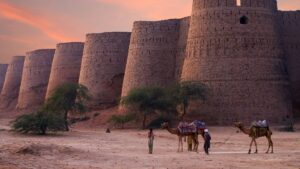
Standing above the flat landscape of the Cholistan Desert, Derawar Fort is one of the most recognisable historical landmarks in southern Punjab. Its enormous circular bastions can be seen from far across the desert, making the journey towards the fort almost as memorable as arriving at it.
Located in Bahawalpur District, Punjab, Derawar Fort is an important stop for travellers interested in Pakistan’s forts, desert landscapes and the history of the former princely state of Bahawalpur. The Department of Archaeology and Museums records the fort as a protected historic monument, while UNESCO includes Derawar and the Desert Forts of Cholistan on Pakistan’s Tentative World Heritage List.
A trip here requires more planning than visiting an attraction inside a major city. Derawar lies deep in the Cholistan region, visitor facilities are limited, and access to parts of the fort may depend on current permissions. Travellers should therefore treat it as a desert excursion rather than a simple sightseeing stop.
Table of Contents
Derawar Fort at a Glance
Where Is Derawar Fort?
History of Derawar Fort
Architecture and Why the Fort Is Important
What to See at Derawar Fort
How to Reach Derawar Fort
Entry, Tickets and Opening Hours
Best Time to Visit
How Long to Spend at Derawar Fort
Where to Stay
Food and Facilities
Safety and Practical Travel Tips
Nearby Places to Visit
Suggested Derawar Fort Itinerary
Is Derawar Fort Worth Visiting?
Derawar Fort at a Glance
Where Is Derawar Fort?
Derawar Fort is located in the Cholistan Desert in Bahawalpur District, southern Punjab. Official archaeological records place it at approximately 28.7678° N, 71.3339° E.
For most tourists, Bahawalpur is the practical starting point.
The Tourism Development Corporation of Punjab describes Derawar Fort as approximately 95 kilometres south of Bahawalpur and directs travellers towards Ahmedpur East and Dera Nawab Sahib before continuing towards the fort. Exact driving distance can vary according to the route used.
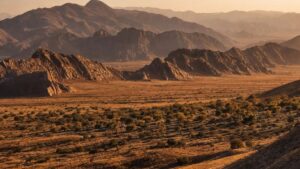
Once the urban areas disappear, the surroundings gradually become more open and arid. This change in landscape is an important part of the experience. Derawar is not surrounded by hotels, shopping streets and restaurants. It sits within a much wider desert environment.
History of Derawar Fort
Derawar Fort has a complicated history, and dates given in different historical accounts do not always agree perfectly.
UNESCO’s Tentative List describes the fort as having been built in the 9th century by Rai Jajja Bhatti, a ruler belonging to the Bhatti clan. The same record states that Nawab Sadeq Mohammad Khan I of Bahawalpur took control of the fort in 1733. The ruling family later lost it before regaining the stronghold in 1804.
Pakistan’s Department of Archaeology and Museums is more cautious about the fort’s earliest history. Its official record notes that relatively little is known with certainty about the early period but confirms its capture by the first Nawab of Bahawalpur, Sadiq Muhammad Khan, in 1733.
This difference is worth understanding because Derawar was not simply constructed at one moment and left unchanged. Like many old fortifications, it was occupied, modified and rebuilt by different rulers.
Its strongest historical association today is with the Abbasi Nawabs of Bahawalpur, whose influence shaped many of the region’s palaces, mosques, tombs and other monuments.
Derawar and the Desert Forts of Cholistan
Derawar was part of a wider system of desert forts rather than an isolated structure.
UNESCO describes a network that included forts such as Meergarh, Jaangarh, Marotgarh, Maujgarh, Dingarh, Khangarh, Khairgarh, Bijnotgarh and Islamgarh. These forts helped protect water sources and routes used by traders, pilgrims and caravans moving through the desert.
That wider context makes Derawar particularly interesting. Its location was connected not only with military defence but also with movement across a landscape where reliable water was extremely important.
Derawar and the other Cholistan desert forts have been on Pakistan’s UNESCO Tentative List since 2016. They are not currently inscribed as a UNESCO World Heritage Site, an important distinction when describing the fort.
Architecture of Derawar Fort
The first feature most visitors notice is scale.
Derawar is a large square fort surrounded by massive circular bastions. The Department of Archaeology and Museums records the structure as approximately 205 metres across, with its main gate on the southern side. It reports that the fort originally had 40 towers or bastions and that most remain intact.
UNESCO similarly describes 40 circular bastions, ten along each side, with walls reaching up to around 30 metres in height. Decorative cut-brick patterns can still be seen across parts of the exterior.
From a traveller’s perspective, the exterior is arguably Derawar’s most impressive feature. Walking around portions of the perimeter gives a much better idea of its scale than viewing the entrance alone.
The brown brick walls also change noticeably with the light. Early morning and late afternoon generally provide more texture and depth for photography than the harsh midday sun.
What to See at Derawar Fort
The Massive Bastions
The rows of rounded bastions are the defining image of Derawar Fort.
Their repeated form creates an imposing defensive wall that looks particularly dramatic against the open Cholistan landscape. Leave enough time to appreciate the exterior from different angles instead of visiting only the main entrance.
Main Gate and Fortification Walls
The southern entrance and surrounding walls reveal more of the fort’s construction and defensive design.
Some areas have undergone conservation work in recent years. In May 2026, archaeology officials reported that restoration of selected residential and secretariat areas inside the fort had been completed, although those restored portions were expected to open to visitors at a later stage.
Because conservation and access arrangements can continue to change, do not assume every restored area will be open during your visit.
Abbasi Mosque
The white Abbasi Mosque near Derawar provides a striking visual contrast with the fort’s brown brickwork.
The wider Cholistan development plan identifies Abbasi Mosque as part of the area’s religious heritage, while current government planning documents also include its rehabilitation among long-term heritage proposals.
Visitors should remember that it is a religious site. Dress respectfully and avoid disrupting prayers or local worshippers.
Royal Graveyard
The royal necropolis associated with the Nawabs of Bahawalpur is another historically important site close to Derawar.
However, this is not simply an open tourist attraction. Government planning documents describe the Royal Graveyard as a private domain of the royal family, so travellers should not assume unrestricted access.
Ask your guide or local authorities about current access rather than attempting to enter restricted areas.
Cholistan Desert Landscape
Do not concentrate entirely on the fort.
The surrounding Cholistan Desert, locally known as Rohi, explains why Derawar was built here and why controlling water and travel routes mattered so much historically.
Even a short stop outside the fort gives visitors a very different experience from heritage sightseeing in Lahore, Multan or Bahawalpur city.
How to Reach Derawar Fort
From Bahawalpur
Bahawalpur is the best starting point for most visitors.
TDCP’s published route directs travellers from Bahawalpur towards the main road in the direction of Karachi, then through the Ahmedpur East area towards Dera Nawab Sahib and onward to Derawar. TDCP places the fort roughly 95 kilometres south of Bahawalpur.
Rather than relying only on distance, allow plenty of time for the complete journey. Road conditions, stops and your final approach can affect travel time.
Should You Drive Yourself?
Travelling independently is possible for people familiar with the region, but first-time visitors will usually find it easier to arrange:
- a private vehicle with a local driver
- a Bahawalpur-based tour
- an experienced local guide
- a suitable vehicle if travelling deeper into desert areas
Do not treat tracks visible in the desert as normal roads. Mobile coverage and roadside services can also be less reliable once you move away from populated areas.
Download offline maps before leaving Bahawalpur and tell someone where you are going.
Travelling from Lahore or Islamabad
If coming from another major Pakistani city, it makes more sense to reach Bahawalpur first and use it as your base.
Bahawalpur can be reached by road and rail from several major cities. Transport schedules change, so check current railway or bus timings before travel rather than relying on old schedules published in blogs.
Trying to combine a long intercity journey and Derawar Fort in the same day can result in a rushed visit.
Derawar Fort Entry Fee and Opening Hours
This is an area where travellers should be careful with information found online.
There is no reliable current public ticket tariff or fixed daily opening schedule that TripGenie could confidently verify for Derawar Fort at the time of writing.
The Department of Archaeology and Museums lists Derawar Fort as privately owned, although it is legally protected as an historic monument.
That ownership situation helps explain why access to the interior has historically been more complicated than at a normal government-operated museum.
Before travelling specifically to enter the fort, confirm current arrangements through TDCP, relevant archaeology or tourism authorities, or a reputable local guide.
Even if interior access is unavailable, travellers may still find the exterior, nearby mosque and wider Cholistan landscape worthwhile.
Best Time to Visit Derawar Fort
The cooler part of the year is generally the most practical period for visiting Derawar.
Cholistan has an arid desert climate, and TDCP notes that summer temperatures can become extremely high.
For most travellers, roughly November to February offers more comfortable conditions for walking outside and exploring the desert. October and March can also be possible, depending on temperatures.
Avoid planning lengthy outdoor exploration during extreme summer heat.
Best Time of Day
If possible, aim for:
- Morning: cooler temperatures and softer light
- Late afternoon: excellent exterior photography and lower sun
Midday can be uncomfortable even outside peak summer.
Check the expected sunset time and leave enough daylight for your return journey.
How Long Should You Spend at Derawar Fort?
For the fort and nearby heritage sites, allow around two to three hours once you reach the area.
A full excursion from Bahawalpur will take considerably longer because of the driving involved.
Travellers interested in photography, desert scenery or local history may want to spend more time, particularly if visiting with a knowledgeable guide.
Where to Stay
Bahawalpur
For most independent travellers, Bahawalpur city is the easiest overnight base.
It provides a wider selection of:
- hotels and guest houses
- restaurants
- fuel stations
- shops
- transport services
- guides and tour operators
Staying in Bahawalpur also allows you to combine Derawar with the city’s historic palaces and other attractions.
Staying in Cholistan
Desert accommodation and camps may occasionally be available through organised operators or special events.
TDCP has also used camping and resort facilities around Derawar during the Cholistan Desert Rally. However, this does not mean accommodation is continuously available to ordinary visitors throughout the year.
Confirm any desert stay in advance.
Food and Facilities
Do not expect the range of facilities available in Bahawalpur.
Before leaving the city, carry enough:
- drinking water
- snacks or packed food
- sun protection
- necessary medicines
- cash
- a fully charged phone
- power bank
During hotter weather, bring considerably more water than you expect to drink.
Avoid leaving plastic bottles, food packaging or other rubbish in the desert.
Safety and Practical Travel Tips
Derawar is rewarding to visit, but its remote setting deserves respect.
Travel with someone familiar with the route. A local driver or guide can make the journey considerably easier.
Start with a full fuel tank. Do not depend on finding fuel close to the fort.
Carry plenty of water. Desert heat and dry air can dehydrate travellers quickly.
Download offline navigation. Mobile internet may be unreliable in remote areas.
Avoid wandering deep into the desert alone. Tracks can be confusing and conditions can change.
Respect restricted areas. Parts of the fort and royal properties may not be publicly accessible.
Do not climb fragile structures. Derawar is a protected historic monument, not an adventure playground.
Dress for the environment. Lightweight clothing, comfortable footwear, sunglasses and sun protection are useful during the day. Winter mornings and evenings may feel much cooler.
Ask before photographing people. This is particularly important around local communities and religious sites.
Check the weather before departure. Extreme heat, dust or unusual weather can make desert travel difficult.
Nearby Places to Visit
Abbasi Mosque
Located beside Derawar Fort, the mosque is the easiest heritage site to combine with your visit and one of the area’s most distinctive architectural landmarks.
Cholistan Desert
A guided desert drive, photography stop or camel experience can add context to the fort. Use reputable local operators and avoid environmentally damaging activities.
Uch Sharif
Historic Uch Sharif is one of southern Punjab’s important centres of Islamic architecture and Sufi heritage.
It can work well as part of a longer Bahawalpur-region road trip rather than being treated as a quick stop beside Derawar.
Noor Mahal
Back in Bahawalpur, Noor Mahal provides another perspective on the history of the former princely state.
Travellers interested in the Abbasi Nawabs will get more from Derawar after also seeing Bahawalpur’s royal architecture.
Suggested One-Day Derawar Fort Trip from Bahawalpur
A practical day can look like this:
Morning: Leave Bahawalpur early after breakfast.
Late morning: Arrive in the Derawar area and explore the fort exterior. If authorised interior access is available, visit the permitted sections with your guide.
Midday: Visit Abbasi Mosque and stop for photographs of the fort and desert.
Early afternoon: Take a short, properly organised Cholistan experience or begin your return before the day becomes too late.
Late afternoon/evening: Return to Bahawalpur.
Travellers visiting in winter may choose to remain longer for late-afternoon photography, but make sure your driver is comfortable with the return route after sunset.
Cholistan Desert Rally and Derawar Fort
Derawar becomes considerably busier during the Cholistan Desert Rally.
TDCP’s 2026 rally used the area around Derawar Fort as a major event venue, with racing, cultural activities, camel experiences and other programmes taking place across Cholistan.
For some travellers, rally dates are an exciting time to visit. For others looking for a quiet heritage experience, they may be less suitable.
Always check the current year’s official event schedule because dates and programmes change.
Conservation of Derawar Fort
Derawar’s condition is an important part of any responsible travel discussion.
Recent conservation projects have worked on bastions, walls, gateways and buildings within the complex. In May 2026, archaeology officials reported completion of restoration work worth more than Rs120 million on selected historic structures inside the fort.
A wider government-backed master plan also proposes additional conservation and tourism improvements, including restoration work, interpretation facilities, a museum concept and rehabilitation of associated heritage sites. These are plans rather than guarantees of what visitors will currently find open.
Responsible tourism can help protect the site. Avoid damaging brickwork, leaving rubbish, driving unnecessarily close to fragile structures or entering closed areas.
Is Derawar Fort Worth Visiting?
Yes, particularly if you are already travelling through Bahawalpur or southern Punjab.
Derawar is not a highly developed tourist attraction with polished visitor centres and predictable access. Its appeal comes from the combination of architecture, history and setting.
Few experiences in Punjab compare with approaching a 40-bastion fortress across the open Cholistan landscape.
Travellers who expect a remote heritage excursion rather than a conventional city attraction are likely to appreciate it most.
For the best experience, base yourself in Bahawalpur, travel with a reliable driver or local guide, leave early, carry adequate supplies and confirm interior access before departure.
FAQs
Where is Derawar Fort located?
Derawar Fort is in the Cholistan Desert in Bahawalpur District, Punjab, Pakistan. Bahawalpur is the most practical major city from which to plan a visit.
How far is Derawar Fort from Bahawalpur?
TDCP places Derawar Fort approximately 95 kilometres south of Bahawalpur. Actual driving distance and travel time depend on your chosen route and road conditions.
Who built Derawar Fort?
UNESCO’s Tentative List attributes its original 9th-century construction to Rai Jajja Bhatti of the Bhatti clan. The fort was later controlled and extensively associated with the Abbasi Nawabs of Bahawalpur.
How many bastions does Derawar Fort have?
Derawar Fort is famous for its 40 circular bastions, traditionally arranged with ten along each side of the square fortification.
Is Derawar Fort a UNESCO World Heritage Site?
No. Derawar and the Desert Forts of Cholistan are on Pakistan’s UNESCO Tentative List, but they are not currently inscribed on the World Heritage List.
Can tourists go inside Derawar Fort?
Interior access can be restricted. The Department of Archaeology and Museums records the fort as privately owned, so travellers should verify the current permission requirements before visiting.
What is the Derawar Fort ticket price?
TripGenie could not verify a current official public entry fee. Avoid relying on old prices from blogs or social media and confirm locally before travelling.
What are Derawar Fort’s opening hours?
A dependable official daily schedule could not be verified. Contact tourism authorities or your local guide before departure, particularly if entering the fort is an important part of your trip.
What is the best time to visit Derawar Fort?
The cooler months, particularly November to February, are generally the most comfortable for desert travel. Early morning and late afternoon are preferable for walking and photography.
Can I visit Derawar Fort in one day from Bahawalpur?
Yes. A day trip from Bahawalpur is practical if you leave early and arrange reliable transport. Allow enough time for the drive, the fort, Abbasi Mosque and stops in the Cholistan landscape.